Choose An Entryway Bench That Fits Real Life
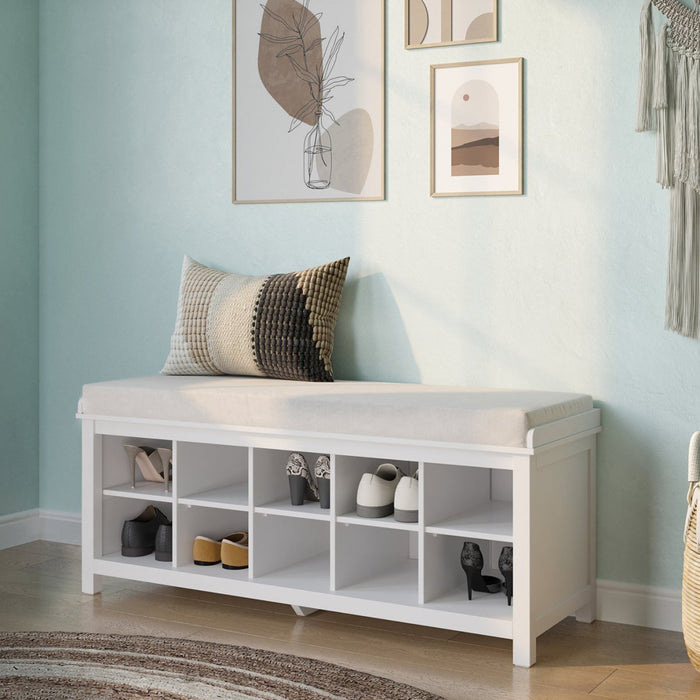
An entryway bench with shoe storage should make arriving and leaving feel easier. It gives you a place to sit, a home for everyday footwear and an opportunity to keep the area around the door more organized. The right choice starts with the space you can comfortably use.
A bench can fit against a wall and still interfere with the way the room works. Door swings, passing space, nearby furniture and the room needed to put on shoes all matter. A hall tree introduces height and wall requirements as well, so its footprint is only part of the decision.
Use this guide to record your available space and explore an illustrative shoe-capacity estimate. The tool keeps furniture fit separate from internal storage capacity. That helps you compare John Louis Home benches and hall trees with a clear understanding of what still needs to be verified on the actual product.
Measure The Wall And The Path Through The Room
Measure the usable wall width between the nearest obstructions. Include baseboards, outlets, door trim and anything that projects into the furniture area. If the wall changes shape near the floor or above seat level, note those details rather than recording a single generous measurement.
Next, measure the route people use to enter the home. Consider what happens when someone is carrying groceries, taking off a coat or walking past a seated person. Tape the proposed furniture footprint onto the floor so you can see how it changes movement through the room.
The available width is a screening measurement, not a complete fit approval. Product depth, height and any required wall clearance still need to be checked. If a piece is close to the maximum width you measured, confirm the exact outer dimensions and allow for the realities of the room.
Entryway Bench Dimensions: Look Beyond Seat Width
Entryway bench dimensions usually describe the outside of the furniture. Those measurements help establish whether the piece can occupy the intended space, but they do not reveal the size of every internal compartment. Panels, dividers and the cushion can all affect how the bench is used.
Check depth as carefully as width. A deeper seat may project into the walking route, while a nearby door may need more room to open fully. Think about the space occupied by someone sitting down and leaning forward to tie shoes, not just the space taken by the empty bench.
Seat height should feel appropriate for the intended users. If possible, compare the listed height with a seat you already find comfortable. Include the cushion in that comparison. The best dimensions are the ones that suit both your room and the everyday action the bench is meant to support.
Hall Tree Dimensions: Account For The Whole Wall
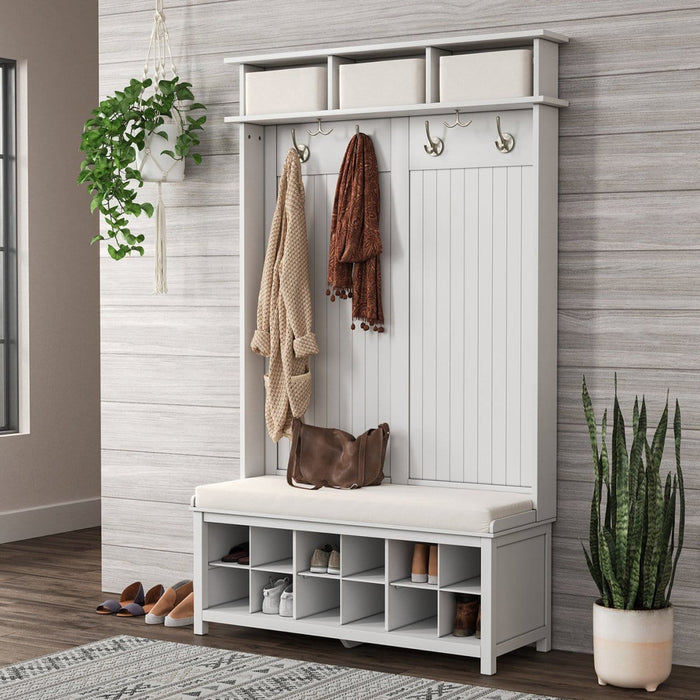
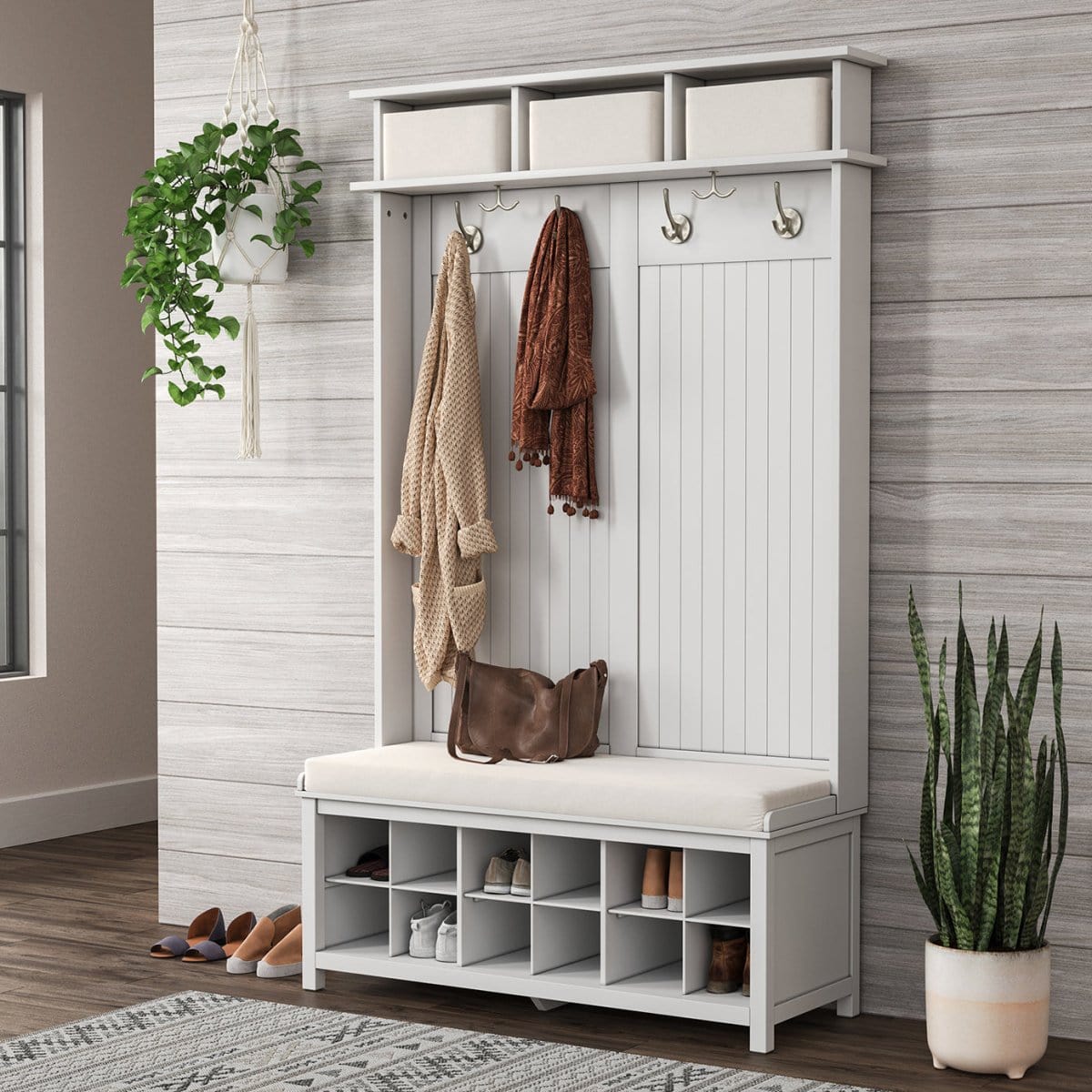
A hall tree with bench combines a sitting area with vertical storage. That can help bring coats, bags and footwear into one zone, but it also asks more of the wall. Measure ceiling height and check for switches, artwork, thermostats or trim that could interfere with the upper structure.
Consider the way hanging items project. A winter coat or full bag can extend beyond the back panel and change the practical depth of the furniture. Doors and nearby storage should still operate with the hall tree in everyday use rather than only when the hooks are empty.
Follow the product’s assembly and anti-tip instructions. Do not assume a freestanding appearance means no attachment is required. If the wall construction or room conditions raise questions, resolve them before use. Height, stability and placement are separate checks from whether the base fits within the available width.
Shoe Storage Bench Capacity: Measure Your Footwear
Shoe storage bench capacity varies with the footwear you own. Two compact sneakers do not occupy the same space as a pair of wide work shoes or winter boots. Published pair counts can be useful as a product reference, but your practical capacity may differ.
Arrange a representative pair as you would store it and measure its side-by-side width, overall length and height. Include the footwear that creates the biggest challenge, rather than calculating from the smallest pair in the household. If you plan to alternate directions, test that arrangement physically.
The estimator uses your pair footprint and the clear internal shelf dimensions you enter. It counts complete pairs across each shelf level and checks whether the entered depth can support the pair. It does not infer internal storage dimensions from the bench’s outside width or invent a product-specific pair count.
Why Dividers, Bins And Boots Change The Calculation
Dividers help create separate homes for footwear, but they also occupy space. A broad open shelf and several narrow cubbies with the same outside width can hold different arrangements. Calculate each compartment independently when its opening is smaller than the full shelf.
Bins introduce another tradeoff. They can collect gloves, pet supplies and small accessories that otherwise spread across the seat, but the space they occupy is no longer available for shoes. Decide which function matters most in your entryway before choosing a configuration.
Tall boots may need an opening that spans more than one normal shelf level. If a product allows a shelf to be removed, capacity changes along with that adjustment. Follow the product instructions and recalculate the remaining usable storage rather than assuming the original shoe count still applies.
Plan For Daily Shoes Instead Of The Entire Collection
An entryway works best when it has a defined job. Trying to store every shoe in the household beside the front door can overwhelm a compact bench. Start with the pairs used regularly and decide where occasional footwear will live elsewhere in the home.
Count people and daily pairs separately. A household of four may need more than four pairs available if work shoes, casual shoes and school footwear are all in regular rotation. The tool uses a simple household target to help you begin that conversation, and you can change the pairs-per-person assumption.
Create a routine for seasonal changes. Moving winter boots out when the weather changes can free space without adding furniture. The point is to maintain a useful arrival zone, not to maximize the number of shoes you can squeeze into every available opening.
Bench Or Hall Tree: Choose The Functions You Need
A standalone shoe bench can be a good direction when you already have a coat closet or prefer a more open wall. It keeps the visual profile lower and focuses the furniture on seating and footwear. Check whether the configuration offers the shelf arrangement you actually need.
A hall tree brings more functions into one piece. Upper cubbies and hooks can help keep everyday belongings together, especially where a separate coat closet is inconvenient. Before choosing that direction, check wall height and how coats will interact with the seat and surrounding space.
A bench with bins may be useful when small accessories create more clutter than shoes. Think about the items that repeatedly end up on the floor or seat. Choosing around that real problem usually produces a more satisfying result than selecting the furniture with the largest advertised list of features.
Solid Wood Storage For A Frequently Used Space
Entryways are part of the home you use every day. Furniture here should feel considered alongside the flooring, doors and nearby rooms. Solid wood offers natural character and a furniture-like presence that can help the storage zone feel intentional rather than temporary.
Compare the complete product, including the frame, shelf configuration, cushion and care instructions. A material description is only part of the decision. Seating limits and any stability requirements must come from the exact bench or hall tree you select, not from a general statement about wood.
Choose a finish with the room’s lighting and existing furniture in mind. A darker finish can create a defined focal point, while a lighter direction may sit more quietly against the wall. Review the current options for the specific product, since not every configuration is necessarily offered in every finish.
Make The Most Of Your Drop Zone
Give each household member an understandable place to put daily belongings. A simple division by person, category or routine can keep the bench from turning into another general storage surface. Whatever method you choose should be easy to follow when everyone is coming home at once.
Protect the furniture according to its care instructions. Wet or muddy footwear may need an appropriate routine before storage, and removable covers or bins should be cleaned as directed. Avoid assuming a wood finish is waterproof or that all fabrics can be washed in the same way.
Review the arrangement after a few weeks. If shoes collect outside the bench while bins remain empty, adjust the storage allocation. If bags block the seat, move their designated place. A successful entryway layout stays responsive to daily use rather than requiring everyone to work around an inconvenient setup.
Use Your Measurements To Compare Real Products
Once you have measured the wall, route and footwear, explore John Louis Home storage benches and hall tree benches. Keep a short checklist beside the product details: outer width, depth, height, internal openings, seating guidance and installation requirements. Those details turn an appealing photograph into a practical comparison.
The guide links to relevant products, but it does not claim that every displayed option fits your entryway. Where verified outer or internal dimensions are not available in the tool, the result directs you to confirm them. This is especially important when clearances are tight or large footwear dominates your storage needs.
Save your summary and compare it with the current product specifications before ordering. With the right footprint and an honest view of capacity, a bench can do more than hold shoes. It can create a comfortable, organized transition between your home and the day ahead.