What Is The Best Wood For Closet Shelves?
Choosing wood for closet shelves involves more than finding a finish you like. You are choosing a surface that will hold everyday belongings, work with the supporting hardware and become part of your home. The most useful comparison considers appearance, construction, maintenance and the specific installation together.
Solid wood is a strong starting point for homeowners who value natural character and a furniture-like result. Plywood, laminate-covered panels and wire shelving offer different combinations of surface finish, structure and upkeep. Each category includes products with different specifications, so a broad material label cannot tell you everything about performance.
Use the comparison tool to select the materials you want to explore. You can focus on appearance, care or structural questions without sorting through unrelated features. The chart intentionally leaves load and span to the exact product documentation, where those figures can be tied to a defined shelf and support arrangement.
Solid Wood Shelving: Natural Character And A Finished Look
Solid wood brings visible grain and the character of a natural material into a closet. It can make a storage area feel connected to the furniture and trim elsewhere in your home. That visual continuity matters when a closet is open to a bedroom or regularly seen through wide doors.
The material also invites closer attention to construction. Species, board configuration, thickness, finish and support placement all affect the finished shelf. A slatted solid wood shelf behaves differently from a continuous board, so compare the actual component rather than assuming every wood shelf has the same structure or storage surface.
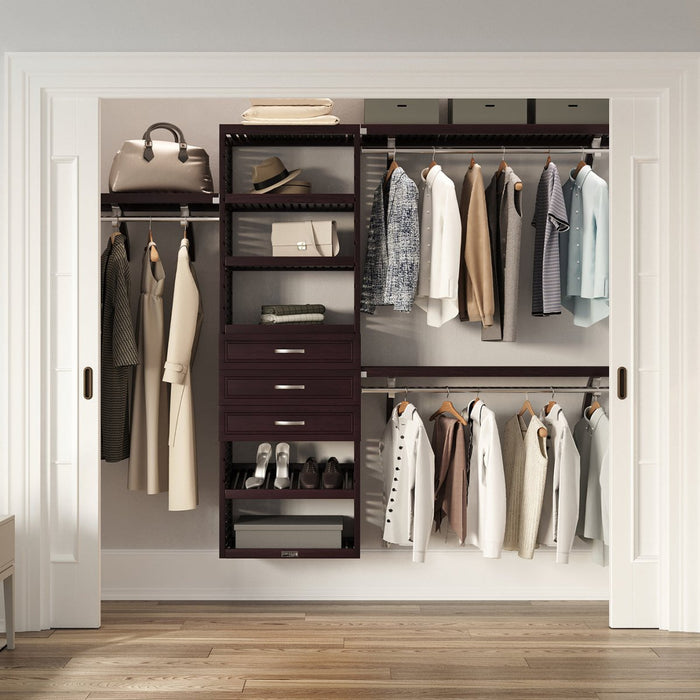
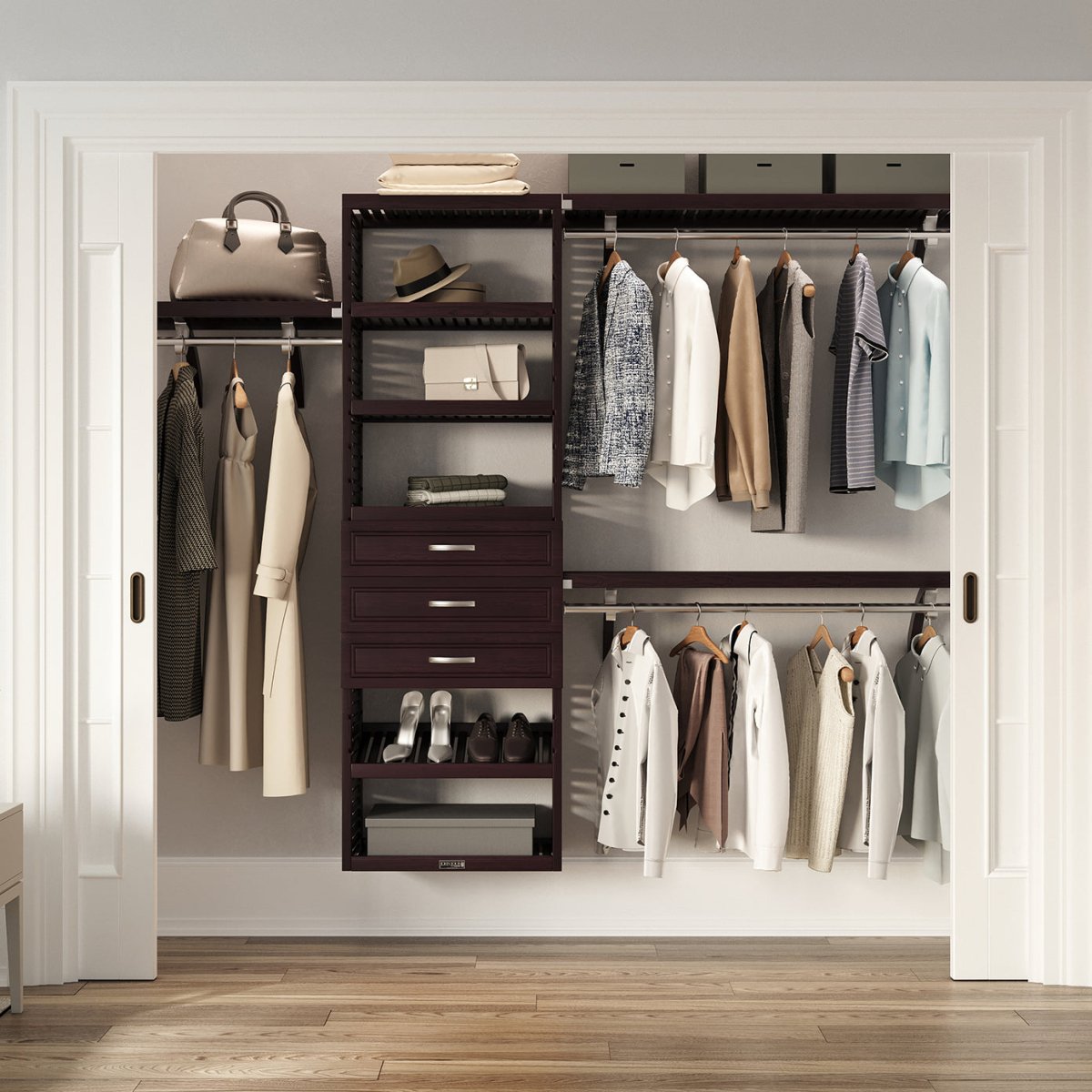
John Louis Home builds its storage offering around solid wood. If that is your preferred direction, consider which system coordinates the shelves, towers and hardware you need. Choosing compatible parts can be just as important to the finished result as choosing the material itself.
Plywood Shelves: Understand The Layers And Edges
Plywood is made from bonded wood layers. The panel grade, thickness and face quality vary, which affects both appearance and how the material is used. Some plywood is designed to receive paint or another finish, while other products use a decorative wood face.
When comparing plywood for a closet project, look at the exposed edges and the work required to finish them. Edge banding, trim and surface preparation can change the total effort involved. An unfinished sheet price does not represent the entire cost of creating a coordinated storage system.
Structural performance also depends on the specific panel and its supports. Ask for documentation that matches the intended shelf dimensions and installation. A generic statement that plywood is strong does not establish how far a shelf can span or how much weight a particular installation can carry.
Laminate Shelving: Separate The Surface From The Core
Laminate describes a surface treatment, not a single underlying structure. A shelving panel may use particleboard, MDF or another substrate beneath its decorative face. That core, along with panel thickness and hardware attachment, influences how the complete shelf should be used.
A consistent color or wood-look pattern can appeal to homeowners seeking a uniform finish. Pay attention to edges, cut surfaces and the way accessories attach. If a shelf is trimmed during installation, the exposed edge may need the treatment specified by the manufacturer to preserve the intended appearance and use conditions.
Care requirements should come from the actual product. Water resistance, cleaning methods and repair options vary by finish and core. Compare those details with the environment where the shelf will live, especially if damp shoes, laundry supplies or pantry spills are part of the expected routine.
Wire Shelving: Evaluate The Storage Surface
Wire shelving offers an open surface that allows visibility through the shelf. That can be useful in some storage settings, but it also changes how small items sit. Narrow containers, heels and folded clothing may interact differently with an open grid than with a flat or lined surface.
Look at the spacing of the wires, the edge design and the support system. A liner may help certain items sit more evenly, provided it is appropriate for the shelf. If you are comparing wire with a slatted wood product, evaluate both surfaces with the belongings you intend to store.
As with other materials, capacity belongs to the complete installation. Track systems, brackets, anchors and support intervals can vary. Do not transfer a rating from one wire product to another or assume the material category alone establishes the performance of a finished closet.
Shelf Thickness, Support Spacing And Load Work Together
A shelf does not function independently of its supports. Thickness, material properties, span, attachment and load placement all contribute to the way it performs. Increasing one dimension does not automatically resolve a problem elsewhere in the assembly, especially when the mounting surface is unsuitable.
Load distribution matters too. Several light stacks spread across a shelf create a different condition from one heavy appliance concentrated in the middle. Long-term loading can also behave differently from a brief test. Ask whether a published capacity applies to a single shelf, a linear foot or a complete system.
This comparison chart does not estimate safe loads or maximum spans for generic materials. For a real project, find specifications for the exact shelf and support configuration. Follow the installation instructions and seek qualified guidance when the documentation does not cover your intended use.
Compare Cost At The Project Level
The cheapest shelf surface is not always the least expensive completed project. A fair comparison includes the material, cutting, edge finishing, supports, garment bars, fasteners and any tools or labor required. Kits and sheet materials package those costs differently, which makes isolated prices difficult to compare.
List what each option includes before calculating a total. One system may come with coordinated hardware, while another requires separate decisions about brackets and finishing. Delivery and preparation can also affect the investment. Compare current prices for the actual configuration rather than relying on a broad material ranking.
Then consider how you expect to use the closet over time. Appearance, maintenance, compatible accessories and the ability to adjust the layout all contribute to value. The right decision balances those priorities with your budget instead of reducing the project to the cost of a single board.
Choose Materials For The Room And The Routine
A bedroom closet, laundry space and pantry do not ask exactly the same things of a shelf. Clothing storage may prioritize a smooth, finished appearance and convenient hanging. A pantry may need a stable surface for small containers and a cleaning routine that accommodates occasional drips.
Think through the actual environment. Moisture, sunlight, temperature changes and frequent handling can influence maintenance requirements. No broad material category should be treated as unaffected by those conditions. Read the care guidance for the finish and keep the storage area appropriate for the selected product.
For open closets, visual consistency may carry extra weight. Shelves, drawers and accessories are part of the room rather than hidden behind a door. For utility spaces, retrieval and easy organization may be the main priorities. Both approaches benefit from comparing the complete system in its intended setting.
Ask Better Questions Before You Order
A useful product comparison should leave you with specific questions. What material is the shelf made from? What are the actual dimensions? Which supports are required? What does the listed capacity cover? Which accessories are compatible, and what changes when the shelf is cut to fit?
Ask about the finish as well. Find out how it should be cleaned, whether touch-up guidance is available and how additional components can be matched later. Photographs can help with appearance, but they do not replace dimensional drawings or installation instructions when planning a precise layout.
Keep a record of the answers alongside your room measurements. This makes it easier to compare options without relying on memory or promotional language. If two products seem similar, these details often reveal the practical differences that matter most to your project.
Build A Closet Around Lasting Everyday Use
A material comparison is most valuable when it leads back to the way you live. Decide how much hanging space, folded storage and enclosed organization you need, then choose a system that supports those functions. Material quality and layout quality work together; one cannot compensate for the complete absence of the other.
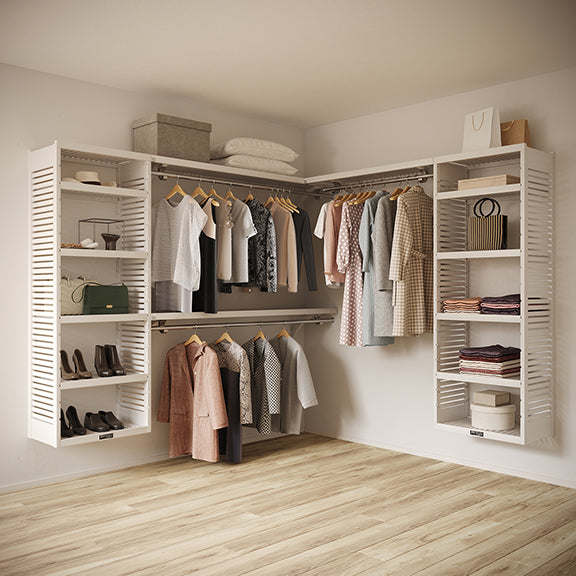
Explore John Louis Home solid wood closet systems if natural character and coordinated storage are priorities for your home. Compare open configurations with drawer options, review the component details and consider how the finish will work in the room. The right arrangement should feel intentional without becoming difficult to maintain.
If you are still weighing layouts, use the closet planner or request a free closet design. Bring the material questions you have identified here. A clearer understanding of both the room and the system helps turn a general preference for wood into a practical, considered storage upgrade.